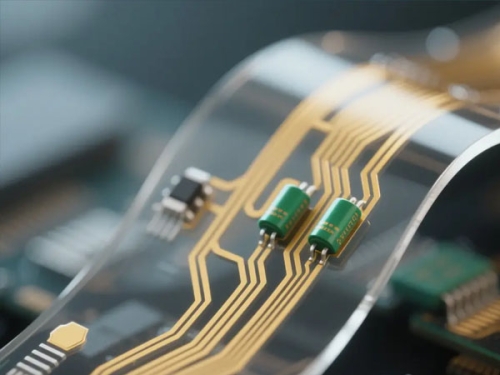

Key Characteristics and Design Benefits of Flexible PCBs
Compared to traditional rigid boards, Flexible Printed Circuits (FPCs) offer revolutionary design flexibility and spatial advantages. Their core benefits can be summarized by four definitive engineering pillars:
1. Streamlined Assembly (Short) FPCs feature pre-configured, integrated routing that completely eliminates the complex, error-prone manual connection of extra flat cables. This plug-and-play nature significantly shortens total assembly time and lowers labor costs.
2. Space Optimization (Small) With a significantly smaller and more compact footprint than standard rigid PCBs, FPCs effectively reduce the overall volume of the end product, making devices lighter, more portable, and sleeker.
3. Ultra-Lightweight Profile (Light) FPCs are exceptionally lightweight compared to rigid boards. By stripping away unnecessary weight from the substrate, they allow engineers to heavily minimize the final product's total weight without sacrificing performance.
4. Micro-Thin Flexibility (Thin) Boasting an ultra-thin profile, FPCs provide superb mechanical flexibility. This allows the circuitry to be freely bent, folded, or rolled, empowering robust three-dimensional (3D) high-density assembly within extremely confined or irregular spaces.